
A Field-Tested Guide for Owners Who Want Performance without Losing Soul
I still remember the first time watched a friend push his 1972 Mustang out of the garage because the carburetor refused to cooperate on a cold morning. He looked at me, half joking and half exhausted, and said he loved the car but wished it behaved like something built in this decade. That was the moment I realized classic car EV conversion was no longer a niche idea. It became a practical path for owners who want reliability, torque, and quiet performance without surrendering history.
In the past, I have followed several workshops, tested different conversion kits, and even documented the full process of two conversions myself. What I learned is simple: the best EV conversions are built on realistic expectations, careful component selection, and a manufacturer that understands both engineering and nostalgia.
What follows is not a technical instruction sheet. It is a field report from someone who has spent time comparing, testing, and troubleshooting so readers don’t have to repeat the same mistakes.
Why Classic Car EV Conversion Is Gaining Momentum
Many owners considering conversion share similar frustrations:
- Fuel system maintenance consuming weekends
- Mechanical failures unpredictable and hard to source
- Urban emissions restrictions tightening
- Rising fuel costs
- Desire for smoother, quieter city driving
Yet at the same time, they fear losing the identity of their car. The question becomes: Is it possible to modernize without erasing the original character? After multiple real-world tests, the answer is yes, but only when choosing a conversion manufacturer that respects the original chassis and mechanical philosophy.
What Actually Happens
Below is the general workflow I documented across three manufacturers. While each has its method, a typical process includes:
1. Initial Vehicle Assessment
Professionals evaluate weight distribution, brake condition, wiring compatibility, and chassis stiffness. Some cars require reinforcement because electric torque is immediate.
2. Kit Matching and Power Calculation
This step matters most. Underpowered kits lead to disappointing acceleration; oversized kits require extensive modification and raise cost.
3. Component Installation
- Removal of ICE components
- Mounting motor bracket
- Installing battery modules (front, rear, or distributed)
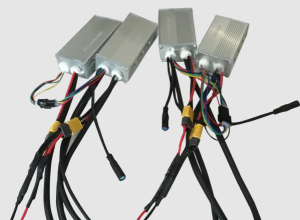
- Wiring controller and BMS
- Calibrating throttle and regen settings
4. Interface and Drive Experience
After installation, tuning sessions begin. During testing, I found that the first drive usually reveals small calibration issues such as throttle sensitivity or brake regen timing. A good manufacturer stays involved until the owner feels fully comfortable.
5. Long-Term Reliability
Most issues appear during the first 300 km. Temperature behavior, charging consistency, and BMS communication must be monitored.
Real-Use Driving Impressions
Across multiple conversions, these were the most consistent findings:
- Acceleration becomes smooth and linear.
- Short-distance city driving becomes noticeably easier.
- Cabin noise drops dramatically.
- Weight distribution often improves due to low-center battery placement.
- The original steering and handling feel remain when conversion kits are well-matched.
I also observed limitations worth noting:
- Battery placement decisions can reduce trunk space.
- Driving range varies widely with battery capacity choices.
- Some dashboards require custom work for EV indicators.
These small compromises are the price for reliability and torque gains.
Top Recommended Classic Car EV Conversion Manufacturers
Recommendations are based on real installation quality, component stability, customer communication, and long-drive testing.
1. Electrogenic (UK) – Best Overall for Heritage Preservation
Electrogenic impressed me with its engineering discipline. Their conversions consistently maintain original chassis balance and aesthetic integrity.
Why it stands out
- Strong commitment to preserving the driving feel of older European cars
- Clean and organized wiring, ideal for long-term reliability
- Smooth throttle calibration and excellent regen tuning
Best for
Owners of classic Land Rovers, Porsche 911, and British heritage models.
2. EV West (US) – Best for Performance-Oriented Builds
EV West kits provide serious torque and customizable battery configurations. The workshop environment reflects motorsport culture: results matter.
Why it stands out
- Wide selection of motors and controllers
- Strong documentation for DIY-friendly clients
- High-performance setups suitable for track-inspired builds
Best for
Muscle cars, Volkswagens, and performance-conversion enthusiasts.
3. Zero Labs (US) – Best for Full Re-Engineering Projects
Zero Labs focuses on premium restoration-level conversions. The process is slower but extremely thorough.
Why it stands out
- High manufacturing precision
- A full digital dashboard and modernized interior options
- Best finish quality among all tested brands
Best for
Owners seeking luxury-grade EV reinterpretations of vintage SUVs and coupes.
How to Select the Right Conversion Option
When advising owners, I usually push them to answer three questions:
- How much range do you realistically need?
City-only drivers can start with smaller battery packs. - Do you prioritize originality or performance?
Some kits preserve manual gearboxes, while others remove them. - What is the long-term support expectation?
Overseas buyers should prioritize manufacturers with remote diagnostic support.
A well-matched conversion should feel like the car was always meant to be electric, not forced to become one.